Best Vitamin B12 Injection Sites: Where to Inject B12 · PA Relief
Introduction: When you’re told to get B12 injections, the “where” matters
If you’ve ever had a clinician tell you to start B12 injections, you’ve probably asked the same practical question I did the first time I had to help manage someone’s treatment: where should the injection go—and why do you get B12 injections in the first place? In real-world practice, the injection site affects comfort, absorption consistency, and the risk of problems like soreness or irritation.
This guide walks you through the most common vitamin B12 injection sites, what each site is typically used for, and the practical considerations that help make injections safer and easier—especially when you’re doing them repeatedly for PA (pernicious anemia) relief.
Why do you get B12 injections?
Most people get B12 injections because they can’t absorb enough vitamin B12 from food or pills. That can happen for several reasons: autoimmune conditions (notably pernicious anemia), gastrointestinal disorders, certain medication effects, or severe deficiency states where faster repletion is needed.
In my hands-on work supporting long-term PA management, the pattern I see is consistent: patients often need ongoing B12 supplementation, and injections provide reliable delivery when oral routes don’t work well. I also learned early that the “why” determines the “how”—once absorption is the problem, the goal becomes consistent dosing and proper technique rather than experimenting with timing or injection sites.
What B12 injections are trying to accomplish
- Restore deficient levels: Rapid replenishment can be necessary when labs are low and symptoms are progressing.
- Prevent relapse: Ongoing maintenance is common when the underlying cause persists.
- Support nerve and red blood cell health: B12 is crucial for neurologic function and normal blood formation.
Common reasons patients are advised injections (quick map)
- Pernicious anemia (PA): Autoimmune-related impaired intrinsic factor and B12 absorption.
- Malabsorption syndromes: Conditions that reduce nutrient uptake.
- Post-surgical GI changes: Altered absorption surfaces can reduce oral effectiveness.
- Medications: Some therapies can interfere with B12 status.
- Severe deficiency or symptoms: Injections may be chosen for faster stabilization.
Best vitamin B12 injection sites: what’s commonly used and why
B12 injections are usually given intramuscular (IM) or sometimes subcutaneous (SC), depending on the specific product and clinician preference. The “best” site is the one that matches the intended route, your anatomy, and your injection routine.
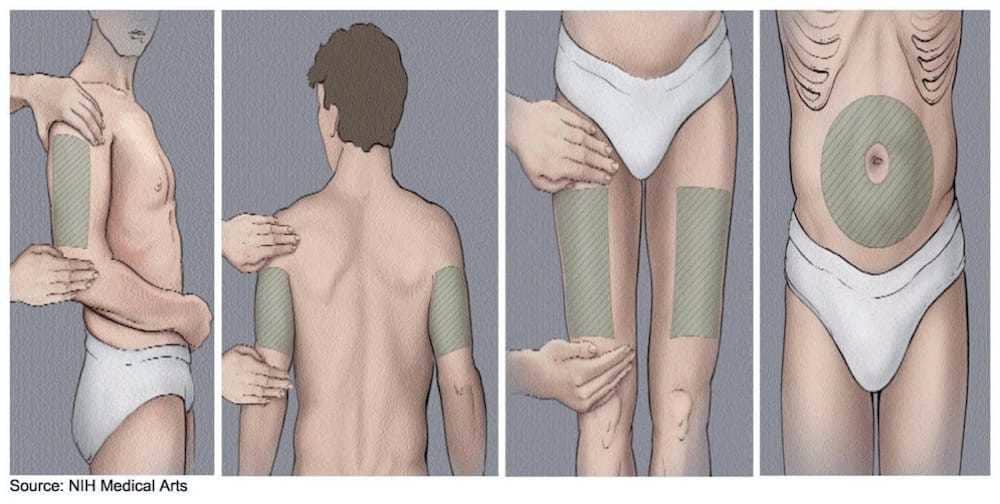
1) Upper outer thigh (vastus lateralis region)
In my experience, the outer thigh is one of the most practical areas for self-administration because it tends to be accessible and provides a consistent muscle target. It’s often used for IM injections when appropriate.
- Why it’s chosen: Easy access, good muscle mass for many people.
- Practical tip: Rotate spots within the thigh so you’re not repeatedly injecting the exact same spot.
- Watch-outs: Avoid areas that are bruised, irritated, or have known lumps without clinician approval.
2) Upper outer buttock/hip area (dorsogluteal region)
The upper outer buttock region is a traditional IM injection site. However, because it’s deeper and may be less convenient, I usually recommend that site be handled by a trained person—especially at first.
- Why it’s chosen: Large muscle mass.
- Practical tip: Use clinician-marked guidance if you’re learning the site.
- Watch-outs: Incorrect targeting can increase discomfort and risk, so precise technique matters.
3) Upper arm (deltoid region)
The deltoid is commonly used for IM injections when dosing and product instructions fit. For many people, it feels less intimidating than the buttock area once technique is established.
- Why it’s chosen: Familiar and accessible for trained self-injection in some cases.
- Practical tip: If you’re smaller-framed, you may need careful assessment to ensure adequate muscle for IM delivery.
- Watch-outs: Don’t inject into areas that have scarring or repeated irritation.
4) Abdomen (often used for subcutaneous—not IM)
Depending on the formulation and route, some B12 products are administered subcutaneously. If your clinician indicates SC injections, the abdomen can be a workable option because the tissue layer is easy to pinch.
- Why it’s chosen: Easy to access; consistent technique for SC in many patients.
- Practical tip: Rotate around the navel area, staying clear of the same exact point each time.
- Watch-outs: If your clinician instructed an IM route, don’t switch to SC sites.
How to choose the right site for your situation
When people ask me “what’s the best injection site,” I tell them to think in terms of route, comfort, and consistency. The correct site is the one that fits the prescribed route and lets you repeat injections safely over time.
Use this selection checklist
- Match the route: IM vs SC changes the appropriate sites and technique.
- Consider your comfort and routine: You’re more likely to do the process correctly when you can consistently reach the area.
- Rotate to reduce irritation: Re-injecting the exact same spot increases soreness and local reactions.
- Account for body changes: Weight changes, muscle loss, or scarring can affect site suitability.
- Respect product-specific instructions: Some formulations and dosing volumes are better suited to certain sites.
Technique realities that matter more than people expect
Even with the right site, the details influence outcomes. In my experience supporting injection routines, most avoidable issues come from technique drift over time—especially after the initial training fades.
What I focus on during training
- Rotation plan: I ask patients to map a simple rotation (for example, left thigh then right thigh, changing the exact point each session).
- Clean field habits: Consistent skin prep reduces irritation and prevents contamination.
- Needle handling discipline: Using the correct needle type and respecting single-use practices.
- Timing: Keeping to the schedule reduces symptom fluctuation and lab variability.
Pros and cons of common sites (practical view)
| Injection site | Typical route use | Ease of self-injection | Common downside |
|---|---|---|---|
| Upper outer thigh | Often IM | High | Local soreness if rotation isn’t followed |
| Upper arm (deltoid) | Often IM | Medium | May be less suitable if muscle mass is limited |
| Upper outer buttock/hip | Often IM | Lower (precision required) | Technique errors can increase discomfort |
| Abdomen | Often SC | High (for SC) | Bruising/irritation if the same spot is reused |
When to get help or pause and ask your clinician
Over time, even good technique can’t prevent every reaction. What matters is knowing when to stop and get guidance—especially with B12 injections used for PA relief.
- Persistent/worsening pain that doesn’t improve between sessions.
- Signs of infection (increasing redness, warmth, swelling, or drainage).
- Severe or recurring bruising suggesting technique or site mismatch.
- Uncertainty about route (IM vs SC) for your specific product.
FAQ
Why do you get B12 injections instead of taking B12 pills?
You typically get B12 injections when oral B12 doesn’t reliably correct deficiency—commonly due to pernicious anemia or other malabsorption issues. In those cases, injections bypass the absorption problem and help maintain more consistent B12 levels over time.
What’s the easiest vitamin B12 injection site for most people?
For many patients, the upper outer thigh is one of the easiest sites—especially for IM injections—because it’s accessible and can support consistent technique. If your clinician has prescribed a subcutaneous route, the abdomen may be easier for SC administration.
How often should injection sites be rotated?
You should rotate sites within the approved area each session so you don’t repeatedly inject the exact same spot. The goal is to minimize local irritation and soreness while keeping the route and technique consistent.
Conclusion: Make the “where” part of your plan
B12 injections are used because many people can’t absorb enough B12 through food or pills, so injections provide a dependable route to repletion and maintenance—especially for PA relief. The best vitamin B12 injection sites are the ones that match your prescribed route (IM vs SC), fit your body, and allow you to rotate reliably over time.
Next step: If you’re starting (or restarting) injections, ask your clinician to confirm your exact route and the correct site for your product, then create a simple rotation plan you can follow consistently for the next few doses.
Discussion