Vitamin B12 Injections in Fort Lauderdale
If you’ve been trying to lose weight with the usual mix of diet and exercise, it can feel frustrating when progress stalls. In my clinic work in South Florida, one of the most common questions I hear is: can vitamin B12 injections help you lose weight?
In this guide, I’ll explain what B12 injections can (and can’t) do for weight management, who is most likely to benefit, how Fort Lauderdale patients typically approach treatment, and what to discuss with your clinician so you make a safe, evidence-based decision.
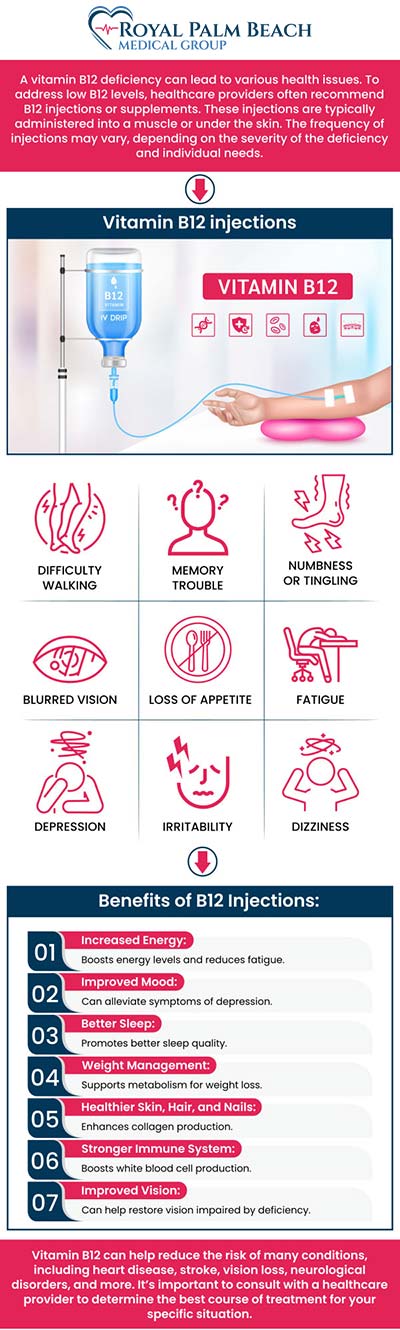
What Vitamin B12 Actually Does (and Why Weight Loss Is the Wrong Shortcut)
Vitamin B12 is essential for red blood cell formation and neurologic function. It also supports energy metabolism—meaning it helps your body run critical chemical pathways correctly.
Here’s the key point from my experience: B12 injections are not a “fat burner.” Weight loss requires a sustained calorie deficit. If someone is gaining weight due to overeating, inactivity, medication side effects, sleep issues, or insulin resistance, B12 won’t directly override those drivers.
Where B12 can play a supporting role is more specific:
- Correcting deficiency: If you’re low in B12, you may feel fatigue, have reduced activity, or experience vague symptoms that make weight management harder.
- Improving energy and function: When deficiency is corrected, some people report better stamina or fewer “run-down” feelings—indirectly helping them stick with movement and routines.
- Supporting normal metabolism: B12 is involved in cellular processes, but that doesn’t translate into automatic weight loss for everyone.
So when patients ask, “can vitamin B12 injections help you lose weight?” my practical answer is: they can help some people lose weight indirectly if they truly have B12 deficiency (or absorption problems) that’s limiting their ability to function, train, or maintain healthy habits.
When B12 Injections May Help: The Deficiency-to-Energy Pathway
In hands-on practice, the best outcomes happen when treatment matches the underlying cause. That means we start by sorting out whether B12 deficiency is actually present.
Common scenarios where B12 injections are considered
- Low serum B12 on labs (often confirmed with additional testing depending on the case).
- Dietary risk (e.g., limited animal products), especially if labs show deficiency.
- Absorption issues such as pernicious anemia, certain gastrointestinal conditions, or medication-related absorption concerns.
- Neurologic or fatigue-related symptoms that align with possible deficiency.
How this can affect weight outcomes
When B12 deficiency is untreated, people sometimes feel chronically tired or “foggy,” which can reduce daily activity and lower motivation for consistent exercise. After correction, I’ve seen patients regain the ability to follow through with walking programs, strength training, or meal planning—changes that do influence body weight over time.
But if your B12 levels are normal, and you’re asking B12 injections for weight loss, the likelihood of meaningful weight change is low. In those cases, addressing the real weight drivers (nutrition quality, portion size, protein/fiber targets, sleep, stress, medication effects, and metabolic health) usually matters far more.
Fort Lauderdale Approach: What a Smart Plan Looks Like
Because you’re searching “Vitamin B12 injections in Fort Lauderdale,” you likely want something practical: how clinics typically structure evaluation, dosing, and follow-up. In my experience, the safest and most effective plans share the same framework: confirm need, treat appropriately, and measure response.
1) Start with an assessment, not guesswork
A clinician should ask about symptoms, diet patterns, GI history, and medications. Then they may order labs such as serum B12 and, depending on the situation, additional markers to assess functional status.
2) Choose the right administration plan
B12 can be administered by injection when deficiency is present or absorption is unreliable. The exact schedule varies by protocol and lab results. In a real clinic workflow, injections are often paired with a plan for monitoring and reassessment rather than “set it and forget it.”
Limitation to keep in mind: not every fatigue or weight plateau is B12-related. If your labs are normal, continuing injections without a clear indication can waste time and delay targeting the real cause.
3) Track the outcomes that matter
Instead of only weighing yourself, I recommend tracking measurable habits and symptoms for a few weeks:
- Daily steps or minutes of movement
- Energy level (simple 1–10 scale)
- Sleep quality and wake time consistency
- Diet adherence (especially protein and fiber)
- Weight trend over time (not a single day)
This makes it easier to determine whether B12 corrected a real bottleneck—or whether you should pivot to other evidence-based weight interventions.
Potential Benefits and Downsides of B12 Injections
To stay grounded and trustworthy, here’s a balanced view I’ve shared with patients many times.
Potential benefits
- Symptom improvement when deficiency is real
- Better ability to sustain routines that support weight loss (activity, training consistency, daily energy)
- Targeted therapy for absorption-related or lab-confirmed needs
Potential downsides or limitations
- Limited weight-loss impact if you’re not deficient
- Time and cost of ongoing visits or repeated dosing
- Need for monitoring rather than indefinite treatment
- Other causes of fatigue and weight plateau may be missed if B12 becomes a default answer
If your main goal is fat loss, I view B12 as a nutritional correction tool, not a primary weight-loss strategy.
What to Ask Your Clinician Before Starting
When patients consider vitamin B12 injections in Fort Lauderdale, I suggest bringing a short list of questions. This helps you avoid “trial-and-error” medicine and supports a clear rationale.
- Do my labs show B12 deficiency or impaired function?
- What symptoms am I targeting with B12—fatigue, neuropathy, anemia risk, or something else?
- What dosing schedule do you recommend and why?
- When will we recheck labs and decide whether to continue?
- If my B12 is normal, what’s your plan for the weight loss plateau?
That last question is especially important when the core search intent is weight loss. It keeps the focus on the real levers that drive outcomes.
FAQ
Can vitamin B12 injections help you lose weight even if your B12 is normal?
Usually, no—B12 injections are most helpful when deficiency or absorption problems are present. If your B12 levels are normal, injections may not meaningfully affect body weight. In that case, a clinician should focus on other drivers of weight plateau (nutrition, sleep, activity, stress, and metabolic health).
How soon would I notice any difference after starting B12 injections?
If you’re truly deficient, some people notice changes in energy or stamina within a few weeks. However, weight loss depends on behavior consistency and calorie balance, so the scale may change more slowly than energy symptoms. Tracking energy, steps, and weight trends together helps set realistic expectations.
What’s the safest way to use B12 injections for weight-related goals?
Use B12 injections only when there’s a clinical reason—ideally supported by labs and symptom evaluation—then pair treatment with evidence-based weight strategies (protein/fiber targets, portion structure, regular movement, and sleep). Reassess periodically to confirm the benefit.
Conclusion: Use B12 as a Support, Not a Strategy
So, can vitamin B12 injections help you lose weight? The most accurate answer from real-world clinical logic is: they can support weight loss indirectly if they correct a genuine B12 deficiency that’s affecting your energy, activity, or overall function. If your B12 is normal, injections are unlikely to be a primary weight-loss solution.
Next step: Schedule an evaluation with a clinician to check whether you actually have B12 deficiency (and discuss your weight-loss plateau), then—regardless of B12 results—build a targeted plan for nutrition, movement, and sleep that creates a sustainable calorie deficit.
Discussion