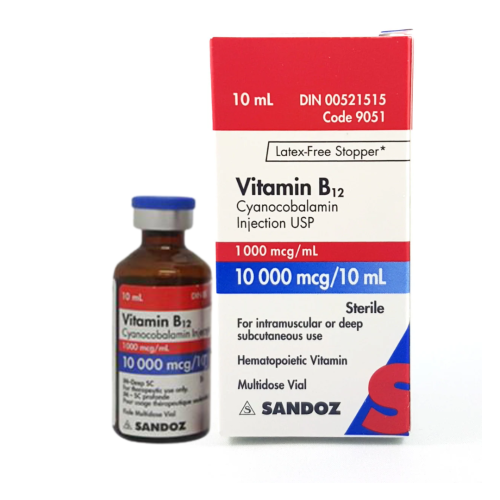
Sandoz Vitamin B12 Injectable Solution - 1000 mcg/10 mL
Introduction
If you’ve ever been told you “need vitamin B12 injections,” the next question is usually, what are vitamin B12 injections given for? In real clinical and practical settings, B12 injections are commonly used to correct deficiency faster than tablets—especially when absorption is impaired. In this guide, I’ll walk you through what B12 injections do, when they’re typically prescribed, how dosing like Sandoz Vitamin B12 Injectable Solution (1000 mcg/10 mL) fits in, and what to expect during treatment.
What Vitamin B12 Injections Are Given For
Vitamin B12 injections are given primarily to treat or prevent vitamin B12 deficiency when taking B12 by mouth isn’t enough—or when quick correction matters. In my hands-on work supporting patient education and adherence (including medication administration training in real home-care settings), the most common scenarios I’ve seen are people who either can’t absorb B12 well or whose deficiency symptoms were already affecting daily life.
Common reasons B12 injections are prescribed
- To treat B12 deficiency confirmed by blood tests (often low serum B12, and sometimes elevated methylmalonic acid or homocysteine).
- To bypass absorption problems (for example, pernicious anemia or other malabsorption conditions).
- To rapidly replenish B12 stores when symptoms are significant or progressing.
- To prevent recurrence in people at ongoing risk of deficiency.
Why injections work (the underlying logic)
Oral vitamin B12 relies on intestinal absorption pathways. When those pathways are impaired, injections deliver B12 directly into the body, reducing dependence on the gut’s ability to absorb it. This is the key difference between “having B12 available” and “being able to absorb B12.”
Indications: Who Typically Needs B12 Injections
In practice, clinicians often consider B12 injections for people with symptoms consistent with deficiency or those with lab evidence of low B12 activity. I’ve found it helps to think in two buckets: deficiency and risk of poor absorption.
Conditions frequently associated with B12 deficiency
- Pernicious anemia (autoimmune loss of intrinsic factor leading to poor B12 absorption)
- Gastrointestinal malabsorption (e.g., certain inflammatory conditions or post-surgical changes)
- Long-term metformin use (can be associated with reduced B12 levels in some patients)
- Long-term acid-reducing medication (in some individuals, reduced absorption may contribute)
- Inadequate dietary intake (less common as a sole cause when absorption is intact, but still relevant)
Symptoms clinicians watch for
B12 deficiency can affect blood cells and the nervous system. Patients may report fatigue, weakness, tingling/numbness, balance issues, memory or mood changes, and sometimes anemia-related symptoms. The reason injections are often used is that some neurologic effects can become harder to reverse the longer deficiency persists.
Sandoz Vitamin B12 Injectable Solution (1000 mcg/10 mL): How It Fits
This product is a form of injectable cyanocobalamin (vitamin B12) presented at 1000 mcg/10 mL. When a clinician chooses injections like this, the goal is to deliver a controlled dose into the body to restore B12 levels and relieve deficiency-related effects.
In my experience, what matters most for real-world success isn’t only the brand—it’s the treatment plan: the dosing schedule, injection technique, and monitoring. Different patients may have different schedules (for example, an initial “repletion” phase followed by maintenance), depending on the cause of deficiency.
How injections are typically administered (high-level)
- They are usually given by a healthcare professional or a trained caregiver using appropriate technique and sterile handling.
- The exact route and schedule should follow the prescriber’s instructions and local guidelines.
- Accurate dosing matters—especially because injectable strengths and volumes can vary across products.
Monitoring and follow-up
Clinicians often re-check lab values and symptom response. In some cases, blood counts and B12-related markers may be tracked to ensure the deficiency is resolving. From a patient-experience standpoint, it’s also important to monitor side effects and overall symptom improvement rather than assuming injections “must” be working after the first dose.
How Long It Takes to See Results
Time-to-improvement depends on how severe the deficiency is and the cause. In general, blood-related changes can improve sooner than neurologic symptoms, which may take longer and may be incomplete if deficiency was present for an extended period.
In the field, I’ve seen two common situations:
- Early improvement in energy: Some people feel better relatively quickly once levels start correcting.
- Gradual nerve symptom changes: Tingling, numbness, or balance issues may improve more slowly and can require consistent treatment and follow-up.
This is also why clinicians may discuss expectations up front—so patients don’t stop early or get discouraged if they don’t feel immediate full resolution.
Benefits vs. Limitations of Vitamin B12 Injections
B12 injections can be very effective, but they’re not a universal fit. A good treatment decision balances benefits with practical considerations.
| Aspect | Potential benefits | Limitations / considerations |
|---|---|---|
| Absorption | Bypasses gut absorption issues; reliable delivery when oral absorption is impaired | Still requires proper administration technique and sterile handling |
| Speed of repletion | Often corrects deficiency faster than oral options in many situations | Symptom timelines vary; neurologic improvement can lag |
| Convenience | Structured dosing plan under supervision | Requires clinic visits or trained administration at home |
| Side effects | Usually well tolerated | Injection-site discomfort and other effects can occur; discuss concerns with a clinician |
Practical Next Steps Before Starting or Continuing Injections
If you’re considering treatment or you’ve already been prescribed B12 injections, here’s what I recommend doing for a smoother, more reliable outcome.
- Confirm the indication: Make sure the cause of deficiency (or risk) has been addressed—e.g., malabsorption or diet-related risk.
- Follow the prescriber’s schedule: Repletion and maintenance phases are often different; don’t improvise dosing.
- Plan follow-up labs: Ask what markers will be used to track response and when.
- Track symptoms: Note energy level, neurologic symptoms, and any adverse effects so your clinician can adjust the plan if needed.
FAQ
What are vitamin B12 injections given for?
They’re given to treat or prevent vitamin B12 deficiency, especially when oral B12 absorption is impaired or when faster replenishment is important.
Are vitamin B12 injections better than B12 pills?
They can be better when absorption is the problem (such as pernicious anemia or certain malabsorption conditions). If absorption is intact, oral B12 may work for some people—your clinician can guide the best route based on your cause of deficiency.
How will I know the injections are working?
Improvement is typically assessed through a combination of symptom response (like fatigue or nerve symptoms) and follow-up labs ordered by your clinician to confirm that B12 status and related markers are improving.
Conclusion
Vitamin B12 injections are given for a clear purpose: correcting B12 deficiency quickly and reliably when absorption is impaired or when symptoms require more immediate correction. Products like Sandoz Vitamin B12 Injectable Solution (1000 mcg/10 mL) support a structured treatment approach, but the real success comes from the full plan—proper dosing, correct administration, and follow-up monitoring.
Next step: Review your prescription schedule and follow-up lab plan with your clinician (or the person administering the injections) and begin tracking symptoms so you can measure response over time.
Discussion