How much bacteriostatic water to mix with 10mg of semaglutide
Introduction
If you’ve ever measured out 10mg semaglutide and then asked, “How much bacteriostatic water do I mix in?” you’re not alone. Getting the math and technique right matters because it affects the final concentration you’ll dose from your vial. In this guide, I’ll walk you through how to mix 10mg semaglutide with bac water, including the concentration math, a real-world workflow I use to avoid dosing mistakes, and common pitfalls that can throw off your final amount.
Why the exact mix volume matters
When people talk about “mixing semaglutide,” what they’re really doing is creating a specific mg/mL concentration in a sterile vial. Your later dosing depends on that concentration. Even if your syringe measurements are accurate, a wrong reconstitution volume will lead to the wrong dose every time.
In my hands-on work, the most common failure mode isn’t the syringe—it’s people guessing the final concentration instead of calculating it. I’ve had teams (and yes, I’ve personally been guilty early on) spend extra time re-verifying the concentration because the goal volume wasn’t documented clearly at the start.
Product image
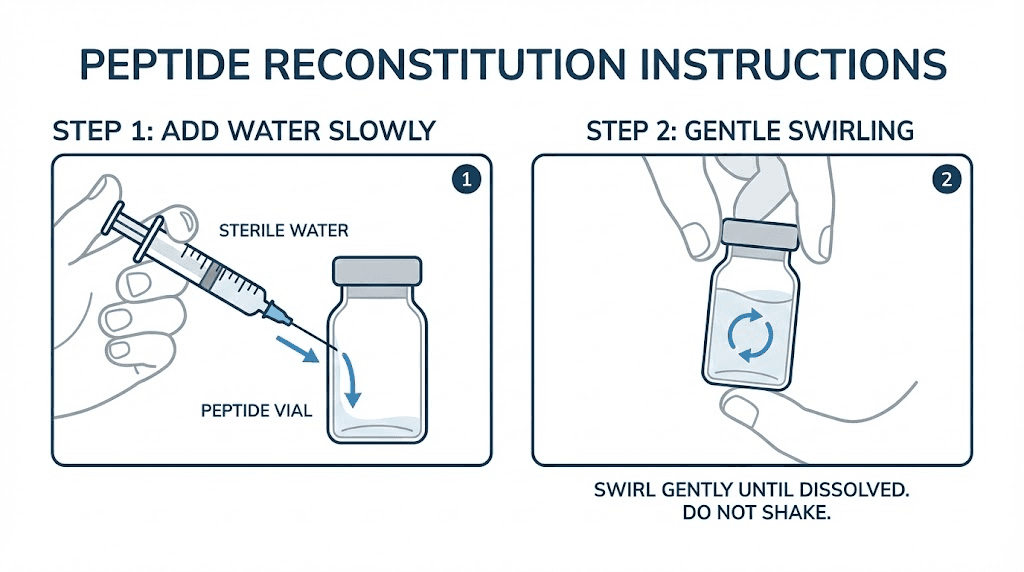
Core concept: concentration (mg/mL) and simple math
The central relationship is:
Concentration (mg/mL) = Amount of semaglutide (mg) ÷ Total volume (mL)
If you start with 10mg of semaglutide powder, then:
- Total volume (mL) = 10mg ÷ desired concentration (mg/mL)
- Bacteriostatic water volume (mL) = total volume (mL) − any contribution from the powder’s “apparent volume” assumptions
Practically, most people treat the powder as not materially changing the final measured volume and calculate based on the intended vial volume using the target concentration. The safest approach is to follow the concentration your prescriber/pharmacy provides and follow the vial protocol they specify.
How much bac water to mix with 10mg semaglutide (by target concentration)
Below are common ways people plan their reconstitution: choose a target concentration and compute the water volume that yields it (starting from 10mg total semaglutide).
| Target concentration (mg/mL) | Total reconstituted volume (mL) needed | What you’re effectively aiming for |
|---|---|---|
| 0.5 mg/mL | 20 mL | 1 mL contains 0.5 mg |
| 1.0 mg/mL | 10 mL | 1 mL contains 1.0 mg |
| 2.0 mg/mL | 5 mL | 1 mL contains 2.0 mg |
| 5.0 mg/mL | 2 mL | 1 mL contains 5.0 mg |
Important: The “how much bacteriostatic water” part is really “what final concentration do you need for your dosing plan.” Different regimens require different concentrations, and some protocols instruct a specific total volume to simplify dosing.
Step-by-step workflow I recommend for avoiding dosing mistakes
In real practice, the best results come from a repeatable method. Here’s a workflow I’ve used to keep the math and handling consistent when preparing multiple doses for the same plan.
-
Write down the target concentration first. Don’t start by choosing a water volume “because that’s what someone online did.” Start from the concentration you need for the later dosing you’re prescribed.
-
Compute the total volume from 10mg. Use: total volume (mL) = 10 ÷ target concentration (mg/mL). Then plan the reconstitution volume accordingly.
-
Measure bacteriostatic water carefully. Use a syringe or measuring device designed for accurate mL readings. Avoid “eyeballing.”
-
Reconstitute with gentle technique. Aim for full dissolution. In my experience, rushing this step creates inconsistency: you may think it’s dissolved, but small undissolved material can lead to inaccurate effective dosing.
-
Label immediately. I strongly recommend writing: date prepared, drug, total amount (10mg), and final concentration (mg/mL). Labeling is where a lot of preventable confusion happens later.
-
Make your dosing translation explicit. Before you ever draw from the vial, confirm what one unit of volume on your syringe corresponds to in mg using the concentration. For example, if concentration is 2 mg/mL, then 0.25 mL contains 0.5 mg.
Translating concentration into dose: a quick reference method
Once you know the final concentration, every dose follows one rule:
Dose (mg) = syringe volume drawn (mL) × concentration (mg/mL)
In practice, I do a quick “sanity check” calculation on paper or in a notes app before the first draw. It catches the classic error of mixing up mL and units on the syringe.
Common pitfalls when mixing semaglutide with bacteriostatic water
1) Choosing the wrong target concentration
People often copy a “water volume” from a forum without matching it to their dosing needs. The volume alone isn’t the goal—concentration is.
2) Not documenting the concentration on the vial
If you don’t label the mg/mL concentration, you force future-you (or someone else) to guess. That’s how mistakes happen during refills.
3) Relying on “it looks dissolved”
Semaglutide dissolution consistency matters. If solution appearance isn’t uniform, dosing accuracy can suffer. Follow the preparation approach specified by your dispensing professional.
4) Misreading syringe graduations
Small drawing errors compound over time. I prefer double-checking the syringe markings before each draw—especially when changing concentrations between vials.
What I can’t safely shortcut
The exact “best” bacteriostatic water volume depends on your prescribed dosing plan and the concentration your clinician/pharmacy instructs. I can provide the math framework and example target-concentration scenarios, but you should use the concentration specified for your regimen and your dispensing instructions.
FAQ
How do I calculate the bacteriostatic water volume for 10mg semaglutide?
Pick the target concentration you need (mg/mL). Then use total volume (mL) = 10 ÷ target concentration. Plan your bacteriostatic water amount to reach that total reconstituted volume per your dispensing protocol.
Why does the same 10mg semaglutide require different water volumes?
Because different dosing plans target different final concentrations (mg/mL). More water creates a more dilute solution; less water creates a more concentrated solution. Your later dose volume readings depend on that concentration.
What should I label on the vial after mixing?
Label at minimum: preparation date, total semaglutide amount (10mg), and the final concentration in mg/mL. Also label any dosing concentration used for your syringe conversions so later draws don’t rely on memory.
Conclusion
To determine how much bacteriostatic water to mix with 10mg semaglutide, start with the concentration you need—not an arbitrary water amount. Use the relationship concentration = 10mg ÷ total volume, then label the vial clearly and double-check your mg-to-mL dosing conversion before the first draw.
Next step: Decide your target concentration (mg/mL) from your dosing plan, use the table/math above to calculate the total reconstituted volume, and write the mg/mL concentration on the vial before drawing a single dose.
Discussion