How to Store BAC Water After Opening
Can BAC Water Go Bad After Opening? Here’s What I’ve Seen in Real Use
If you’ve ever cracked open a bottle of bacteriostatic water (BAC water) and wondered whether it still works weeks—or months—later, you’re not alone. In my hands-on workflow, this question comes up most often when we’re preparing for multi-week use, stocking clinics or home medical kits, or troubleshooting why a reconstitution step didn’t go as expected. The short answer to can bac water go bad is yes: it can degrade or become contaminated after opening, and the risk isn’t just theoretical.
This guide explains how BAC water behaves after opening, what “going bad” really means (contamination vs. degradation), and the storage habits that keep it usable.
What “BAC Water” Actually Is (And Why Opening Changes the Risk)
Bacteriostatic water is sterile water that contains a bacteriostatic agent (commonly benzyl alcohol) in a fixed concentration. The purpose of the bacteriostatic agent is to inhibit microbial growth, not to make the product immune to contamination.
That distinction matters. Once you open the container and start drawing doses, your biggest threats become:
- Microbial contamination introduced during needle entry or cap handling.
- Improper storage conditions (heat, light exposure, freezing/cycling temperature).
- Label/date uncertainty where the “opened on” date is never recorded.
In my experience, people often focus only on expiration dates printed on the bottle. But contamination risk can start immediately after the first puncture, even if the product was originally sterile and even if it later “seems fine.”
Key Signs BAC Water May No Longer Be Usable
You generally can’t “smell test” sterility. Still, there are practical indicators that should trigger a stop-use decision.
1) Cloudiness, particles, or discoloration
Any visible change—cloudiness, specks, unusual tint—can indicate contamination or incompatibility with how it was handled. Don’t attempt to salvage it.
2) Unexpected performance issues during reconstitution
Sometimes “going bad” shows up indirectly: inconsistent mixing, unexpected turbidity after combining with a powder, or repeated filter/withdrawal difficulties (when applicable). While these can have other causes, I treat them as red flags—especially if they correlate with how long the BAC water has been in use.
3) Compromised container or repeated handling mistakes
If the cap was left off, the septum was repeatedly touched with non-sterile items, or the needle/cannula was used improperly, the contamination probability increases regardless of appearance.
How to Store BAC Water After Opening (Practical, Hands-On Rules)
Below is the storage approach I recommend in day-to-day practice because it directly reduces the two biggest failure modes: contamination events and exposure to destabilizing conditions.
1) Follow the manufacturer’s temperature guidance
Many BAC water products are intended to be stored at controlled room temperature, but some are better kept refrigerated depending on the specific label. The most trustworthy answer is the one printed on your bottle or provided by the dispensing facility.
In my workflow, the “label controls everything” rule saves time and prevents guesswork. If your label states a range, store within it.
2) Keep it cool and consistent (avoid heat spikes)
Heat can accelerate degradation and increase the chance of handling errors (for example, repeatedly bringing warm solutions into a sterile workflow). I’ve seen teams reduce “mystery failures” simply by keeping bottles in a stable location rather than in areas like windowsills, bathroom counters, or near vents.
3) Protect from light if your label recommends it
Some liquid pharmaceuticals are more sensitive to light than others. If the bottle is in a carton or the label suggests protecting from light, keep it there.
4) Prevent freezing and temperature cycling
Freezing and thawing can damage certain solutions or increase contamination risk during repeated handling. If refrigeration is permitted, don’t store where it will frequently get very cold or where it’s likely to freeze.
5) Use strict access hygiene after opening
Storage helps, but sterility is primarily maintained by correct technique. Practical hygiene practices that reduce risk include:
- Keep the cap/septum protected when not actively puncturing.
- Use a sterile syringe and needle each time (as instructed by your setting’s protocol).
- Minimize the time the container is exposed in your workspace.
- Don’t “double-dip” or touch the septum with non-sterile surfaces.
In real clinic setups, I’ve watched contamination events cluster around shortcuts—people rushing, leaving the bottle out longer than needed, or reusing supplies when they shouldn’t. Better technique reduced discard rates far more than storage tweaks ever did.
How Long Is BAC Water Good After Opening?
This is where it gets nuanced. “Good after opening” depends on how it’s handled (puncture technique, storage conditions, time, and whether contamination occurred). The printed expiration date still matters, but opening introduces an additional risk factor that the expiration date doesn’t fully address.
My practical rule is conservative: if the bottle has been repeatedly accessed over a long period, treat it like a high-uncertainty item and align discard timing with your facility’s sterility policy or the dispensing instructions you were given.
A realistic, safety-first framework
- Short, controlled use with careful technique: usability is generally more consistent.
- Long-term opened use: the probability of an access-related contamination event rises over time.
- Any visible change or doubt about sterile technique: discard immediately.
If you want a single target number, use the guidance from your bottle label and dispensing instructions first; if those don’t specify “after first puncture,” follow your organization’s SOP or clinician guidance.
Common Storage Mistakes That Make “Can BAC Water Go Bad” More Likely
Here are the mistakes I most often see when people look for answers online—because they’re easy to do and they directly increase risk.
- Leaving it at room temperature when the label requires refrigeration (or vice versa).
- Storing in places with temperature swings (near heat sources, bathrooms without stable conditions, car storage).
- Not tracking the “opened” date, leading to indefinite use.
- Frequent cap/septum exposure during transfers or preparation.
- Using supplies that aren’t sterile or reusing needles/syringes against protocol.
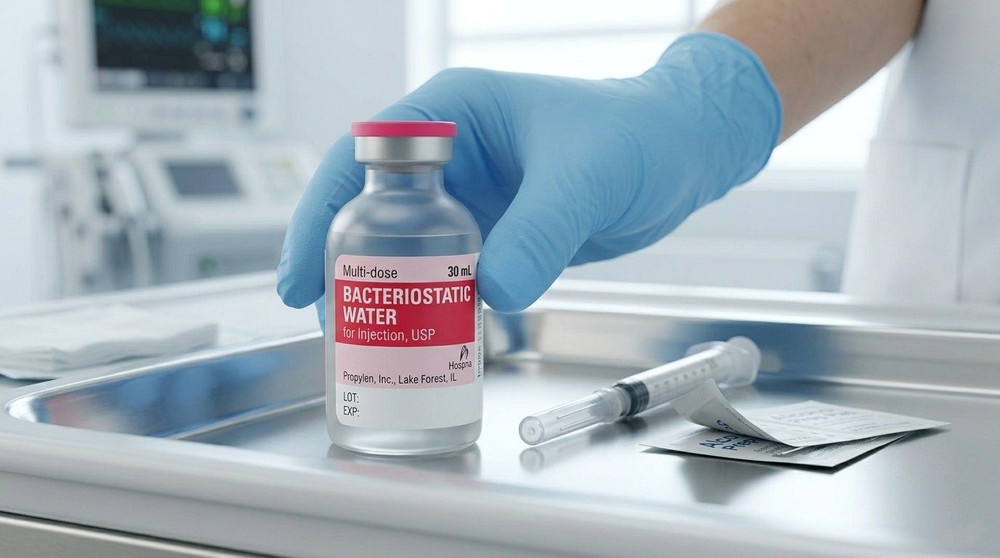
Visual Reference: BAC Water Bottle (What You’re Storing)
FAQ
Can BAC water go bad even if it looks clear?
Yes. Visual clarity doesn’t confirm sterility. After opening, contamination can occur without obvious color or cloudiness changes. If there’s any doubt about access technique, sterility, or storage conditions, discard it rather than trying to “test” it.
Should I refrigerate BAC water after opening?
Only if your specific label or dispensing instructions say to. Storage requirements vary by product formulation and packaging guidance, and the label is the most reliable source for temperature handling.
What should I do if I’m unsure whether my bottle is still good?
Use a conservative approach: check the expiration date, review storage conditions, and consider the length and frequency of punctures. If you can’t confirm proper handling or you notice any visible change, replace the bottle.
Conclusion: Keep BAC Water Usable by Reducing Access Risk
BAC water can go bad after opening—not because the bacteriostatic agent instantly “fails,” but because sterility can be compromised during punctures and because storage conditions can accelerate degradation. The most dependable approach is label-driven storage, stable temperature control, and disciplined aseptic technique, plus conservative discard decisions when doubt exists.
Next step: Write the “opened on” date on your bottle (and note the intended storage location) so you can make a clear, timely decision about whether the bottle should be replaced.
Discussion