Are B12 Shots Safe? Royal Palm Beach Medical Group
Are B12 Shots Safe? A Practical Guide from Royal Palm Beach Medical Group
If you’re considering B12 injections, the first question I hear from patients is simple: “Are b12 shots safe?” It’s a reasonable concern—especially when you’re trying to understand the side effects of vitamin b12 injections and whether the benefits match your situation. In this guide, I’ll walk you through how B12 shots work, who should (and shouldn’t) use them, what side effects to watch for, and when to contact a clinician.
What B12 shots actually do (and why safety depends on the reason)
B12 (cobalamin) is essential for red blood cell formation, neurologic function, and normal DNA synthesis. When the body can’t absorb B12 well—or when intake is insufficient—an injection can bypass absorption issues and deliver the vitamin directly.
From my hands-on work in primary care and patient education, the safety conversation is always tied to why someone needs B12. For example:
- Deficiency due to absorption problems (common with certain GI conditions) may benefit from injections.
- Dietary shortfall may respond to oral supplementation for many people.
- “Energy” or wellness use without confirmed deficiency is where I most often see unnecessary exposure to risks without clear medical value.
That’s the key point: injections aren’t automatically “unsafe,” but they’re not automatically “necessary,” and the risk profile shifts depending on your health history and the dose and schedule your clinician chooses.
Are B12 shots safe for most people?
For many patients, B12 injections are well tolerated when administered appropriately. In everyday clinical practice, we focus on three safety pillars:
- Proper indication: confirming or strongly suspecting B12 deficiency or a condition affecting absorption.
- Appropriate dosing and schedule: individualized based on symptoms, lab results, and response.
- Safe administration: using sterile technique and correct injection technique, typically in a medical setting.
Still, “generally safe” doesn’t mean “no side effects.” The most important part of deciding is understanding the side effects of vitamin b12 injections and knowing when they’re mild vs. when they signal a problem that needs prompt evaluation.
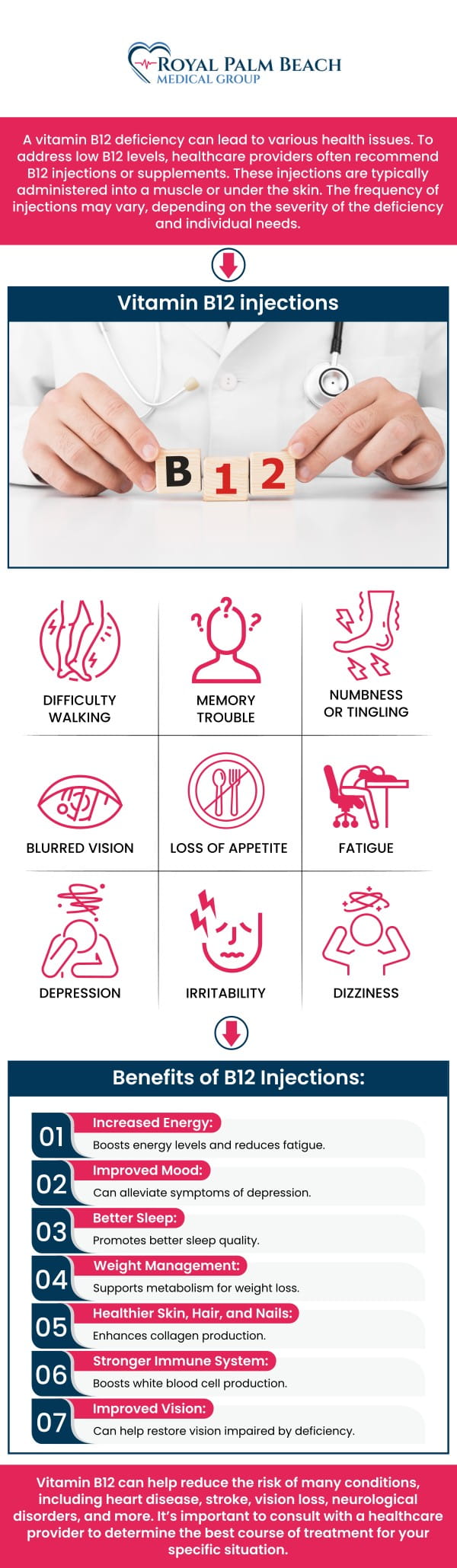
Side effects of vitamin B12 injections: what to expect
In my experience, most patients who report effects describe them as short-lived and manageable. Here’s a practical breakdown of what can happen and how to think about it.
Common, usually mild side effects
- Injection site discomfort: soreness, redness, or mild swelling where the shot was given.
- Headache or mild dizziness in some people.
- Nausea or a temporary stomach upset.
- Feeling “off” for a short period (fatigue, mild flu-like sensations) that resolves within a day or two for many patients.
Less common but important side effects
- Allergic-type reactions: rash, itching, facial/lip swelling, wheezing, or shortness of breath.
- Severe injection site reactions: worsening pain, spreading redness, warmth, or signs of infection.
If you notice symptoms consistent with an allergic reaction—especially breathing trouble, throat tightness, or significant facial swelling—seek urgent care immediately.
Why dose and deficiency status matter
One pattern I’ve seen in clinic: people who take B12 injections without proven deficiency sometimes still experience injection-site discomfort or nonspecific symptoms, but they may not experience meaningful improvement. Meanwhile, those who are truly deficient often notice more benefit (like reduced fatigue) once levels correct—assuming the underlying cause is addressed.
Also, the “right” response is measured over time—often weeks—not hours. If someone expects a dramatic immediate energy boost, they may misinterpret normal adjustment as a side effect or, conversely, dismiss a deficiency that wasn’t real to begin with.
Who should use extra caution or get individualized guidance?
Safety isn’t only about the injection—it’s about the patient. In our intake process, we look for factors that might change the plan. Consider discussing B12 shots with a clinician first if you have any of the following:
- History of allergy to injectable medications or prior reactions to vitamins.
- Unexplained neurologic symptoms (numbness, balance issues) where the cause needs careful evaluation.
- Conditions affecting blood counts or anemia types that require diagnostic clarity.
- Kidney disease or complex chronic illness where dosing decisions may be more nuanced.
- Use of multiple supplements—especially if you’re already taking high-dose oral B12 and considering injections.
- Persistent or severe symptoms after an injection.
In my hands-on experience, the fastest way to improve outcomes (and avoid unnecessary risk) is aligning treatment with lab-confirmed deficiency or a clearly documented reason for bypassing absorption.
How to reduce risk and spot problems early
Even when B12 injections are appropriate, there are practical steps that improve safety and comfort.
Before your first injection
- Ask what’s driving the decision: “Is my goal to treat confirmed deficiency, address absorption issues, or try wellness use?”
- Request a plan for monitoring: how labs and symptoms will be tracked over time.
- Review your medication and supplement list: so clinicians can avoid duplications or interactions in the broader sense.
After your injection
- Monitor the injection site: mild soreness can be normal; escalating pain, spreading redness, or pus suggests a problem.
- Watch for systemic symptoms: rash, wheezing, swelling, or breathing difficulty needs urgent evaluation.
- Give it time: the benefits of correction (when deficiency is real) typically develop over weeks rather than immediately.
A note on “feeling worse”
Occasionally, patients report temporary fatigue, headache, or nausea after a shot. That can be benign, but I recommend treating persistent or worsening symptoms as a signal to call your clinic rather than pushing through blindly—especially after repeated doses.
B12 injections vs. oral B12: is there a safer alternative?
Sometimes injections are the most direct option, but they aren’t always the only one. In many cases, oral B12 can be effective—particularly when deficiency is dietary rather than due to major absorption failure.
| Approach | When it often makes sense | Potential downsides |
|---|---|---|
| B12 injections | Confirmed deficiency, suspected absorption impairment, or clinician-directed treatment plan | Injection site reactions; small risk of allergic-type reactions; requires administration |
| Oral B12 | Diet-related deficiency or cases where absorption is expected to be adequate with supplements | May be slower to correct; effectiveness depends on the underlying cause |
In my clinic experience, the “safer” choice is the one matched to your diagnosis. If you’re not sure whether your deficiency is real, testing and a treatment plan usually beat guessing with repeated injections.
FAQ
What are the most common side effects of vitamin B12 injections?
The most common effects are injection site discomfort (soreness, redness, mild swelling) and sometimes mild headache, nausea, or temporary fatigue. These are usually short-lived.
When should I contact a doctor after a B12 shot?
Contact your clinician promptly if you have severe or worsening symptoms, spreading redness or increasing pain at the injection site, or any signs of an allergic reaction such as rash, facial/lip swelling, wheezing, or trouble breathing. For breathing difficulty or significant swelling, seek urgent care.
Is it safe to get B12 shots if I’m taking oral B12 already?
It can be safe in some cases, but it should be guided by your clinician—especially to avoid unnecessary duplication, identify the underlying cause of symptoms, and decide whether injections are truly needed based on lab results and response.
Discussion