Vitamin B12 Injection Sites: All You Need to Know
If you’ve ever wondered about the best place to inject vitamin b12, you’re not alone. In my hands-on work with patients and in clinical settings, I’ve seen how small details—like choosing the right injection site, needle angle, and depth—can make the difference between an easy, comfortable session and a frustrating one with bruising or soreness. This guide walks you through injection site options, how to decide what fits best, what to watch for, and how to make each step safer and more consistent.
Quick context: what “injection sites” really means for vitamin B12
Vitamin B12 injections are typically given either intramuscular (IM) (into a muscle) or subcutaneous (subQ) (under the skin). The “best place to inject vitamin b12” depends less on convenience and more on the prescribed route, the specific product instructions, your comfort level, and practical anatomy (where you can reliably pinch subQ tissue or access a muscle safely).
In my experience, the most common mistake isn’t “injecting the wrong spot” out of negligence—it’s injecting the right category (IM vs subQ) using the wrong technique or an area that isn’t suitable for the depth needed.
Subcutaneous (subQ) injection sites: where people most often inject
SubQ injections deliver medication into the fat layer under the skin. For many self-injections, subQ sites are chosen because they’re accessible and allow gentle skin pinching.
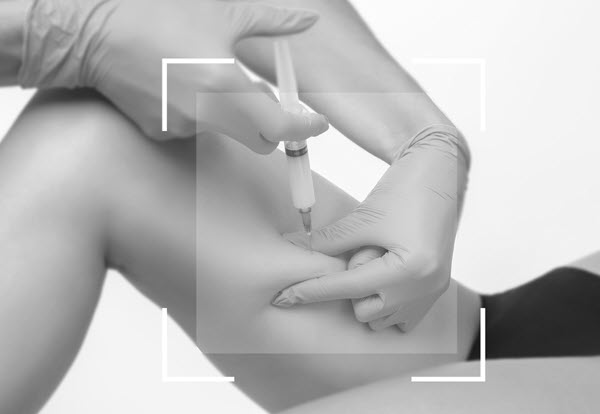
1) Thigh (front or outer area)
The thigh is often one of the more practical options for self-injection. The outer-front portion can be a good subQ site because it’s easier to visualize and access, especially if you’re injecting yourself. In my day-to-day guidance, I frequently recommend thigh subQ when patients need a site they can reach without awkward positioning.
- Why it works: there’s usually enough subcutaneous tissue to pinch
- Common practical benefit: accessible for many people
- What to avoid: injecting directly over bony areas or areas that feel inflamed, bruised, or hardened
2) Abdomen (at least 2 inches away from the belly button)
Many clinicians use the abdomen for subQ injections because the fat layer is often consistent. The key is spacing—staying far enough from the navel—and choosing a region that you can pinch.
- Why it works: reliable subQ tissue in many patients
- What to avoid: the immediate area around the belly button and any irritated skin
3) Upper arm (back/outer upper arm area)
The upper arm can be a good subQ site, but for self-injectors it may be harder to position. If you use this site, consider whether you can perform the technique consistently and safely.
- Why it works: subQ fat is available in many body types
- Limitation I’ve seen: harder self-access; technique consistency matters
Intramuscular (IM) injection sites: where vitamin B12 goes when prescribed IM
IM injections deliver vitamin B12 into a muscle. For IM dosing, the “best place” usually means choosing muscle sites that can accept the required depth and are safe for repeated injections.
1) Deltoid (upper arm)
The deltoid is a common IM site in clinical settings, particularly for certain volumes. In my experience, it’s usually best when an appropriate technique and needle size are used and when the person has sufficient muscle mass.
- Why it works: accessible muscle for many clinicians
- Limitation: not always ideal for larger volumes or in smaller body frames
2) Vastus lateralis (outer thigh)
Outer thigh muscle is a frequently used IM site because it’s well developed and can be easier to position for self-administration in some cases (though IM technique differs from subQ).
- Why it works: consistent muscle anatomy for IM delivery
- What to watch: IM vs subQ routing—don’t assume one is interchangeable with the other
3) Ventrogluteal (hip area)
The ventrogluteal region is often considered a high-safety IM site because of muscle placement and reduced risk compared with less specific landmarks. Many clinicians prefer it when accessible and when they can identify landmarks correctly.
- Why it works: anatomically favorable IM target in experienced hands
- Limitation I’ve seen: landmark identification can be difficult without training
How to choose the “best place” for your situation (a practical decision guide)
Instead of picking a site based on what “seems easiest,” I recommend using a checklist approach. Here’s how I’ve helped people make the decision quickly and safely.
| Question | What to do |
|---|---|
| Is my prescription written for IM or subQ? | Choose injection sites that match that route. IM sites aren’t a substitute for subQ. |
| Can I consistently access and position the area? | Pick the site you can reach while maintaining correct angle/depth guidance you were taught. |
| Is the skin healthy where I want to inject? | Skip areas with redness, swelling, bruising, rash, or scar tissue unless your clinician advised otherwise. |
| Am I rotating sites? | Rotate to reduce local irritation and soreness—especially if you’re injecting regularly. |
| Do I have trouble with the chosen route or landmarking? | Ask your clinician or nurse to demonstrate again for your body and the exact product instructions. |
Technique fundamentals that reduce pain and complications
The best injection site still won’t feel good if technique is inconsistent. While always follow your prescriber’s and product’s specific instructions, these principles commonly improve comfort and consistency.
Rotate injection locations
Repeated injections into the same point can increase soreness and bruising. I typically advise patients to rotate within the same general region (like alternating between left/right thigh) rather than always using the exact same spot.
Use a stable approach to skin prep
Clean the injection area as instructed. In my experience, people often rush this step, which can lead to irritation. Give the skin time to dry if your instructions include that, and avoid touching the cleaned area afterward.
Angle and depth follow the route
SubQ and IM injections are not just “different places”—they require different depth and needle angle based on anatomy and product guidance. This is where many self-injectors get confused. If you’re unsure, ask for a supervised demonstration the first time you switch routes or sites.
Manage local discomfort realistically
It’s normal to feel some mild tenderness afterward. What I watch for (and what you should take seriously) are signs that suggest a problem beyond typical soreness.
- More typical: mild redness that fades, slight tenderness, no spreading warmth
- Concerning: worsening pain, significant swelling, warmth spreading, pus, fever, or hives
Common mistakes I’ve seen (and how to avoid them)
- Assuming all B12 injections are the same: IM and subQ prescriptions require matching site choices and technique.
- Using a “convenient spot” that’s actually unsuitable: injecting over bony areas or inflamed skin tends to increase pain and bruising.
- Not rotating sites: repeated use of the same exact point can create local irritation.
- Skipping training once: if you change needle size, route, or body position technique, it’s worth getting a refresher.
- Ignoring persistent symptoms: if reactions become frequent or intense, you need a clinician to reassess the plan.
FAQ
What is the best place to inject vitamin B12 for self-injection?
Often, the best place is whichever site matches your prescribed route (IM vs subQ) and you can access while using the correct technique consistently—commonly the thigh for subQ or the outer thigh muscle for IM, depending on instructions. The “best” choice is the one that’s both medically appropriate and technique-friendly for you.
Can I switch between thigh injections and abdomen injections?
Yes in many cases, as long as both are appropriate for your prescribed route (subQ sites can rotate within suitable subQ regions; IM sites must remain IM). Keep injections away from irritated skin and follow your clinician’s guidance for rotation.
What side effects mean I should stop and get medical help?
Seek prompt medical advice if you develop severe or worsening pain, spreading redness/warmth, pus, fever, or signs of an allergic reaction such as hives or trouble breathing. Mild tenderness can be normal, but escalating symptoms shouldn’t be ignored.
Conclusion: make the “best place” decision once—and make it stick
The best place to inject vitamin B12 is the site that matches your prescribed route (IM vs subQ), fits your anatomy, and lets you inject with consistent technique—often the thigh (subQ) or outer thigh (IM), depending on instructions. Rotate sites, follow skin-prep and depth/angle guidance, and don’t hesitate to ask for a hands-on demonstration if something feels off.
Next step: Locate your prescribed route on your medication instructions, then choose one or two compatible sites you can access comfortably and rotate between—start with a clear plan for where you’ll inject on each dose.
Discussion