Vitamin B12 Injection Dosage
Vitamin B12 Injection Dosage
If you’ve ever asked yourself “can you drink vitamin b12 injection?” after getting a prescription—or seeing someone online do it—you’re not alone. In my clinic work, this question comes up often right alongside confusion about vitamin B12 injection dosage, frequency, and what “taking B12” actually means. This guide explains typical dosing ranges, how clinicians decide on a schedule, and what to do if you accidentally swallow (or wonder about swallowing) an injection.
I’ll keep it practical: what dosing usually looks like, what changes it, how long it typically takes to see improvement, and the safety basics you should follow every time.
First: Can You Drink Vitamin B12 Injection?
No—vitamin B12 injections are not designed to be swallowed.
Even if some injection solutions are liquid, they’re formulated for intramuscular (IM) or subcutaneous (subQ) administration with specific concentrations, preservatives, and drug delivery intent. In my hands-on experience, people try to treat an injection like a “liquid dose” and it can lead to:
- Ineffective dosing (the intended dose and delivery method don’t translate to oral use)
- GI upset from injection ingredients not meant for ingestion
- Safety issues if the wrong product is used or if the injection is contaminated/opened improperly
If you swallowed a small amount by accident, the right next step depends on the situation. I recommend you contact your pharmacist or prescribing clinician for product-specific guidance, especially if you’re pregnant, have kidney disease, or the patient is a child.
What “Vitamin B12 Injection Dosage” Usually Means
When people search “vitamin B12 injection dosage,” they’re usually referring to one of two clinical goals:
- Repletion (rapidly correcting low B12 stores)
- Maintenance (preventing levels from dropping again)
Dosage varies based on:
- The cause (dietary deficiency vs. pernicious anemia vs. malabsorption)
- Severity (symptoms, anemia, neurologic involvement)
- Lab values (serum B12, methylmalonic acid, homocysteine)
- Route (IM vs. subQ)
- Patient factors (age, comorbidities, adherence challenges)
In practice, clinicians often start with a repletion schedule, then transition to maintenance once blood counts and symptoms improve.
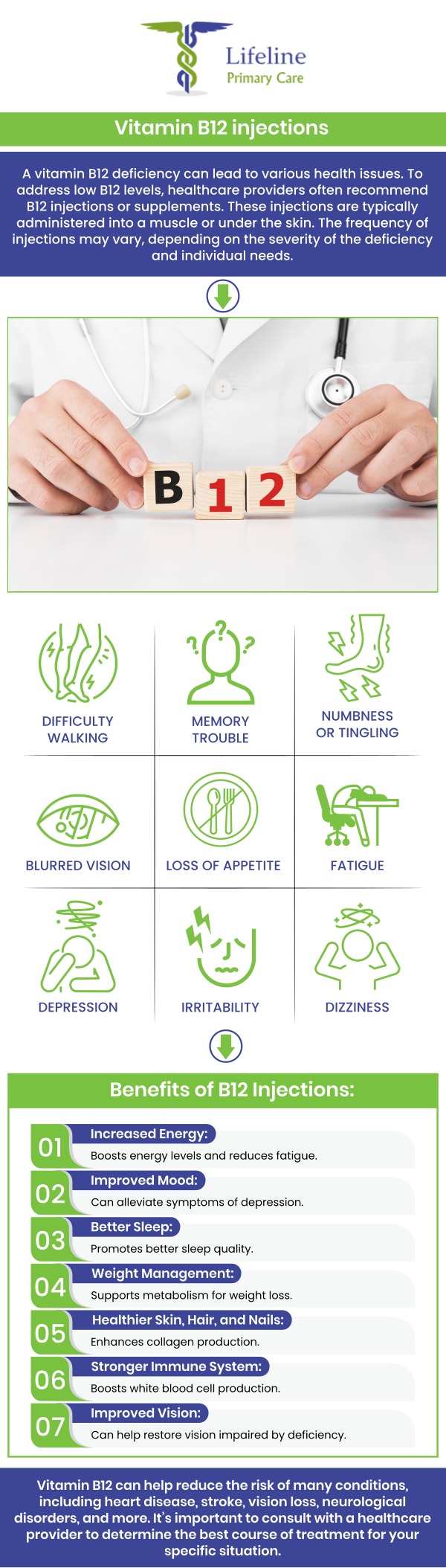
Typical Vitamin B12 Injection Dosage Schedules (Clinician-Style Overview)
Below are common dosing patterns you’ll see in medical practice. Exact dosing should always follow your prescription and the specific product instructions.
1) Initial repletion for low B12 (common patterns)
- Often: daily or several-times-per-week dosing for a short period
- Then: spaced-out doses as levels recover
In my hands-on work, the most important takeaway isn’t memorizing one “magic number”—it’s understanding that repletion is designed to rebuild B12 stores quickly, especially when malabsorption is involved.
2) Maintenance dosing (common patterns)
- Often: injections every few weeks to every few months
- Long-term plan: depends heavily on whether the underlying cause persists
For example, dietary insufficiency may improve with nutrition changes and/or oral supplementation, while pernicious anemia often requires ongoing injections or a long-term alternative.
3) IM vs. subQ and why it matters
Clinicians may choose IM or subQ based on patient preference, injection tolerance, and local protocols. In real-world settings, I’ve seen better adherence when patients understand the reason for the route and feel confident about timing.
Either way, the schedule is usually more important than the route for restoring and maintaining B12 levels—though both influence absorption and consistency.
How Long Until You Feel Better?
With B12 deficiency, timelines can differ by symptom type:
- Energy/fatigue: may improve within days to a few weeks for some people
- Anemia-related symptoms: often improve over a few weeks as blood counts recover
- Nerve-related symptoms (tingling, numbness): may take longer and can be incomplete if deficiency has been present for a long time
In my experience, setting expectations early reduces frustration and helps adherence—people sometimes stop injections too soon because they don’t see immediate results in every symptom category.
When to Reassess Dosage or Schedule
Your clinician may adjust dose or frequency if:
- Your B12 level and/or related markers don’t respond as expected
- Symptoms persist or worsen
- You have ongoing malabsorption (e.g., certain GI conditions, post-bariatric surgery)
- There are adherence barriers (missed doses, difficulty with self-injection)
It’s also worth noting that some people don’t respond well because the underlying mechanism isn’t just “low B12 on paper.” That’s why many clinicians look at methylmalonic acid and homocysteine when appropriate.
Safety Notes: What People Get Wrong
Here are the safety issues I see most often when patients ask about B12 injection dosing:
- Trying to drink it instead of using the prescribed route (not intended for oral ingestion)
- Using leftover injections without confirming the product and expiration/handling
- Skipping follow-up labs when the cause of deficiency is still unclear
- Delaying evaluation when there are neurologic symptoms
If you’re dealing with tingling, numbness, balance problems, or significant weakness, don’t treat it as “just low vitamin.” That’s a reason for timely medical evaluation and a clear plan for repletion.
Practical Next Step
If you’re currently prescribed vitamin B12 injections, take one concrete action today: confirm your exact dose and schedule in writing (and clarify route IM vs. subQ with your clinician or pharmacist). If you’ve swallowed any part of an injection or are asking can you drink vitamin b12 injection due to a real incident, ask for product-specific guidance promptly.
FAQ
Can you drink vitamin B12 injection?
No. Vitamin B12 injections are formulated for IM or subQ use, not for drinking. If ingestion occurred accidentally, contact your pharmacist or prescribing clinician for advice specific to the product and the amount involved.
What determines the vitamin B12 injection dosage—low level alone?
Not just the lab number. Clinicians consider the cause (diet vs. pernicious anemia vs. malabsorption), symptom severity (including neurologic symptoms), and the response to prior dosing when deciding frequency and duration.
How will I know if my B12 treatment is working?
Commonly, clinicians monitor symptom improvement and may repeat bloodwork (often including B12 and, when appropriate, methylmalonic acid or homocysteine). If labs or symptoms don’t improve, the schedule may need adjustment and the underlying cause may need reassessment.
Conclusion
Vitamin B12 injection dosage isn’t a one-size-fits-all number—it’s a tailored repletion-and-maintenance plan based on the cause of deficiency, severity, and response over time. And importantly: can you drink vitamin b12 injection? is a clear “no”—injections are intended for IM or subQ administration, not oral drinking.
Next step: confirm your prescription’s exact dose, route, and timing with your pharmacist or clinician today, then follow up as scheduled so your treatment plan can be adjusted based on real response.
Discussion