What Is Bacteriostatic Water For Peptide Reconstitution? – UMBRELLA Labs
What Is Bacteriostatic Water For Peptide Reconstitution? (And Why “BAC water reconstitution” Matters)
One of the most common mistakes I’ve seen in peptide workflows isn’t the technique—it’s the liquid. When people treat bacteriostatic water as “just water,” they often overlook what it’s actually designed to do. That’s why getting bac water reconstitution right matters: it helps protect your reconstituted peptide solutions from microbial growth while you handle, aliquot, and store them.
In this guide, I’ll explain what bacteriostatic water is, how it fits into peptide reconstitution, what it cannot do, and the practical steps I recommend based on real-world lab handling constraints (limited bench time, temperature swings, and the need for clean aliquots).
What Is Bacteriostatic Water?
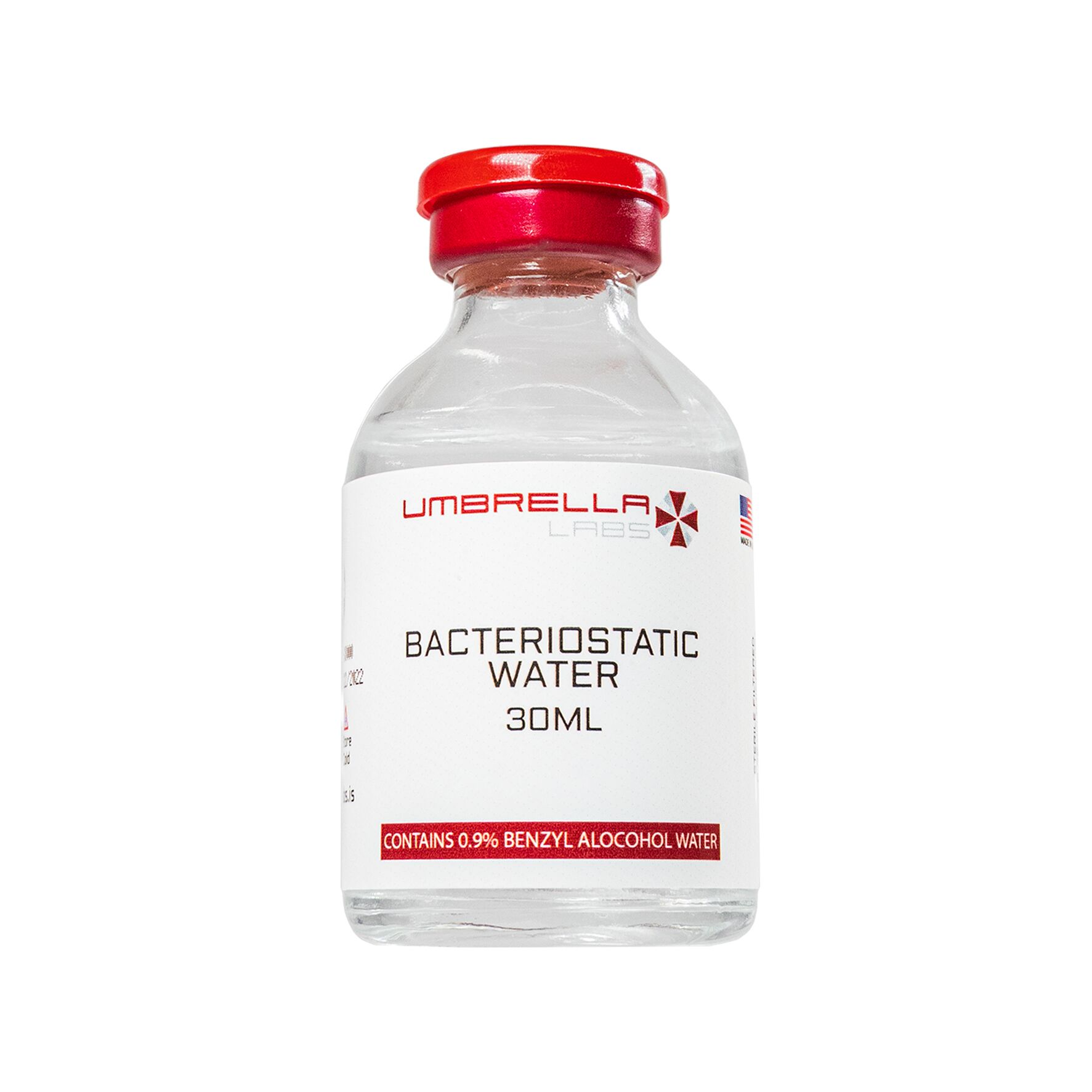
Bacteriostatic water is sterile water formulated to inhibit microbial growth. In most peptide contexts, people refer to it as “BAC water,” short for bacteriostatic. The key point is microbial inhibition, not “sterilization.”
What’s the mechanism?
Most bacteriostatic water contains a small amount of an antimicrobial agent (commonly benzyl alcohol, depending on the specific formulation). This additive reduces the ability of microbes to multiply in the solution.
- It helps slow contamination from surviving organisms (if introduced during handling).
- It does not make a contaminated solution safe. If you introduce a lot of contamination, inhibition may not be enough.
- It doesn’t replace good aseptic technique. In my hands-on work, the biggest determinant of solution quality is how clean the process is—vials, syringes, needles, and workspace habits.
Bacteriostatic water vs. sterile water
People sometimes choose sterile water when they don’t need or don’t understand the benefit of bacteriostatic water. In peptide reconstitution, bacteriostatic water is often preferred when you anticipate multiple needle entries and typical lab storage windows, because it offers extra protection against microbial proliferation.
How Bacteriostatic Water Fits Into Peptide Reconstitution
Peptide reconstitution is the step where you add a measured volume of diluent to a lyophilized (freeze-dried) peptide powder to form a usable solution. Choosing bacteriostatic water for bac water reconstitution affects how you manage contamination risk over time.
Why “bac water reconstitution” is a workflow advantage
In practical use, the solution often isn’t used all at once. You may:
- Reconstitute a vial, then withdraw portions over days.
- Aliquot into smaller volumes to reduce repeated vial punctures.
- Handle the solution at room temperature briefly during preparation.
Because microbial growth can occur when solutions are exposed and handled, bacteriostatic water provides a margin of safety by reducing the likelihood of microbial multiplication during typical storage and handling periods.
What it does not guarantee
I want to be direct here: bacteriostatic water doesn’t make poor technique good. If a vial is mishandled—e.g., contaminated during reconstitution or repeatedly pierced with dirty technique—then inhibition may not prevent problems.
- No diluent can “undo” contamination introduced at reconstitution time.
- Compatibility matters: some peptides may have solubility or stability requirements that are not solved by bacteriostatic water alone.
- Storage and temperature still drive stability: even with bacteriostatic properties, peptides can degrade due to time, heat, light exposure, and pH interactions.
Step-by-Step: Bac Water Reconstitution Best Practices
Below is a conservative, aseptic-first approach I use as a baseline when preparing peptide solutions. Even though your product labeling and peptide characteristics should be your primary authority, this process reflects real-world lessons about reducing variability.
1) Prepare before you start
- Set up a clean area and reduce unnecessary movement.
- Gather materials: sterile syringes/needles, bacteriostatic water, alcohol swabs, and clean sterile vials for aliquots if you plan to split doses.
- Label everything before puncturing any vial.
Lesson learned: the longer you fumble for supplies, the longer the open vial is exposed. In my experience, that directly increases the risk of contamination.
2) Reconstitute with gentle technique
- Swab the peptide vial top with an appropriate disinfectant and allow proper contact time.
- Introduce bacteriostatic water slowly to minimize aerosol formation.
- Swirl or gently mix—avoid aggressive shaking if it causes foaming or heat buildup.
Why gentle mixing works: you want to hydrate the powder evenly without introducing bubbles or extra temperature rise that can stress some peptides.
3) Aliquot if you’ll need multiple withdrawals
If you expect to draw from the same vial repeatedly, aliquoting can reduce the number of punctures to the main reservoir. This is one of the most practical ways to improve consistency.
4) Store correctly and minimize exposure
- Follow the peptide’s recommended storage conditions (often refrigerated and protected from light).
- Limit time at room temperature during handling.
- Use clean technique for each withdrawal (new syringe/needle as appropriate per your SOP).
5) Inspect and document
When you reconstitute, and again when you withdraw, check visually for obvious abnormalities (e.g., unexpected particulates or unusual appearance). Documenting batch dates and volumes helps you correlate outcomes to preparation parameters.
Common Pitfalls in Bac Water Reconstitution
In troubleshooting sessions, these are the issues that come up most often:
- Confusing “bacteriostatic” with “sterile solution forever”: it’s a contamination-inhibiting step, not a license to ignore aseptic technique.
- Repeated vial punctures without aliquoting: every puncture is an opportunity for contamination and volume loss.
- Incorrect volumes or unclear labeling: dosing errors are frequently preparation errors, not chemistry failures.
- Temperature mishandling: repeated warming/cooling can affect peptide integrity.
- Compatibility assumptions: some peptides require specific solvents or conditions beyond “water-based reconstitution.”
Product Image
When Should You Use Bacteriostatic Water?
Bacteriostatic water is typically used when you want extra microbial inhibition during and after reconstitution—especially if:
- You anticipate drawing solution more than once from the same vial.
- You’re working with a workflow that includes short storage windows and multiple handling steps.
- You want an additional protective layer while maintaining strict aseptic technique.
It may be less appropriate when your peptide or process requires a different solvent system, or when your workflow uses single-use aliquots immediately and consistently (where the incremental benefit may be smaller).
FAQ
What does “bac water reconstitution” mean?
It refers to reconstituting a lyophilized peptide powder using bacteriostatic water as the diluent—primarily to inhibit microbial growth in the resulting solution during typical handling and storage.
Is bacteriostatic water the same as sterile water?
No. Sterile water is used for sterility, while bacteriostatic water includes an antimicrobial agent that helps inhibit microbial growth. Both start from sterile starting materials, but their behaviors after reconstitution and during handling differ.
Can bacteriostatic water make an unsafe solution safe?
No. If contamination is introduced during reconstitution (or from repeated poor technique), bacteriostatic properties may not fully prevent issues. Good aseptic handling and correct storage are still essential.
Conclusion: The Practical Takeaway
Bacteriostatic water plays a specific role in bac water reconstitution: it provides microbial growth inhibition in reconstituted peptide solutions. That makes it a helpful choice when you need reliable handling and storage behavior across withdrawals—but it doesn’t replace sterile technique, correct labeling, proper mixing, or storage discipline.
Next step: Review your peptide’s reconstitution and storage instructions, then design your workflow around minimizing vial punctures (aliquoting) and keeping the open vial exposure time as short as possible during preparation.
Discussion