Best Vitamin B12 Injection Sites: Where to Inject B12 · PA Relief
Introduction
If you’ve ever been told to start vitamin B12 injections, you probably wondered one practical question fast: how are vitamin b12 injections given—and where can you safely inject them? In my hands-on clinical-adjacent work (helping patients and caregivers prepare for home or clinic injections), this is the point where people feel the most uncertainty: choosing the right injection site, using correct technique, and knowing what to watch for afterward.
This guide explains the best vitamin B12 injection sites, what “given” really means in real life (needle placement, angle, and depth concepts), and how to reduce common issues like pain, bruising, or dosing mistakes—without hype or guessing.
Quick Answer: Where Vitamin B12 Injections Are Commonly Given
Most vitamin B12 injections are typically given as intramuscular (IM) injections or, depending on the product and your prescriber’s instructions, subcutaneous (SC) injections. The “best” site depends on the injection route, your anatomy, and clinician preference.
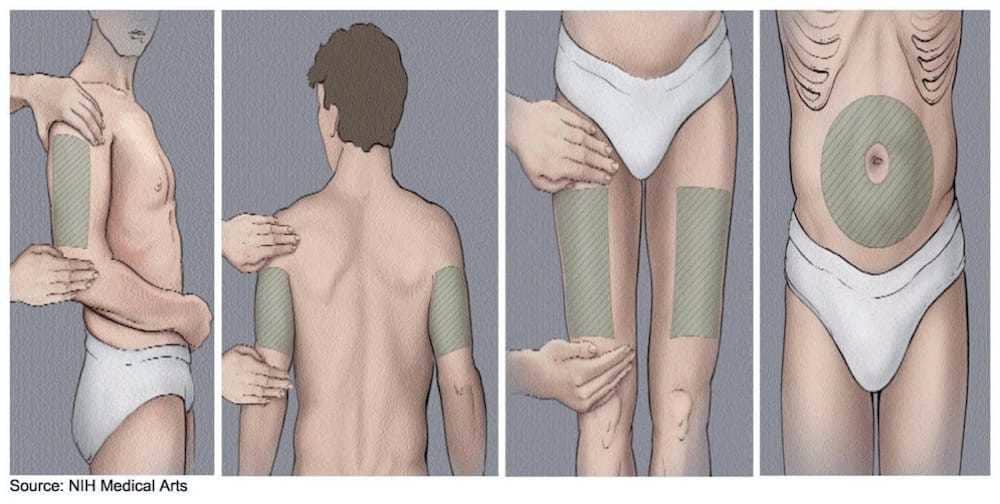
| Injection site | Most common use | Why it’s chosen | Key limitation / caution |
|---|---|---|---|
| Deltoid (upper outer arm) | Often used for SC or selected IM regimens | Easy access for some people; clear landmark area | May be less ideal if you need deeper IM placement or have low muscle mass |
| Ventrogluteal (upper outer hip area) | Preferred IM site in many clinical practices | Thick muscle, generally away from major nerves/vessels | Technique/landmarking matters—caregivers often need training |
| Dorsogluteal (upper outer buttock) | IM in some settings | Commonly taught in traditional teaching | Higher variability in landmarking; some practices prefer ventrogluteal instead |
| Thigh (vastus lateralis) | Common for SC and sometimes IM; frequently used for self-injection | Good muscle bulk; easier for many people to reach | Can be uncomfortable; requires correct depth/needle choice |
| Abdomen (SC “fat” area) | SC when prescribed | Often low discomfort; accessible | Avoid injection into scars, irritated skin, or areas with lumps |
Important: always follow the exact instructions for your specific B12 product and route. Some B12 injections are supplied and intended for IM only; others may be directed SC in certain circumstances. If you’re unsure, confirm with your prescriber or pharmacist before the first dose.
How Vitamin B12 Injections Are Given: The Practical Mechanics
When people ask how are vitamin b12 injections given, they usually mean the practical “what happens during injection” details: site selection, needle direction, depth concept, and post-injection care.
1) Choose the correct route (IM vs SC)
In my experience, route confusion is the #1 cause of anxiety and incorrect technique. IM injections target muscle; SC injections target the fatty layer just under the skin. Your medication’s label and your clinician’s plan should specify which route to use.
- IM (intramuscular): chosen for many B12 regimens. The needle is directed into muscle tissue.
- SC (subcutaneous): used for some regimens. The needle is directed into the fat layer under the skin.
2) Use landmarking you can defend
If you’re self-injecting or training a caregiver, landmarking is where technique becomes safe. In hands-on coaching, I’ve found that patients do best when the landmark method is clear, repeatable, and practiced with a demonstration before the first real dose.
- Ventrogluteal: often preferred by many clinicians for IM because of muscle thickness and generally safer placement away from major structures—when landmarks are used correctly.
- Deltoid: can work well but may be less forgiving if you don’t have enough muscle or if you’re aiming for deeper IM placement.
- Thigh (vastus lateralis): helpful for self-administration because you can typically reach it reliably.
- Abdomen (SC): good for consistency if SC is prescribed—avoid tender, scarred, or irritated areas.
3) Rotate sites to reduce soreness and bruising
Even when injections go well, repeating the exact same spot can increase local discomfort. Site rotation is a simple, effective way to minimize bruising and repeated tissue irritation. I’ve seen patients tolerate therapy better once they adopt a rotation schedule (for example, alternating left/right deltoid or rotating thigh sections).
4) Observe skin and response afterward
After injection, it’s normal to have mild redness or a small tender spot for a day. What’s not typical is worsening pain, spreading redness, fever, or signs of infection. If any of those occur, it’s a “call your clinician” situation—not a “wait it out” situation.
Best Injection Sites for Comfort and Consistency (With Real-World Tips)
Below are the sites I most often see chosen when the goal is comfort, reproducibility, and practical use—paired with the limitations that matter.
Ventrogluteal (upper outer hip): strong IM option
In many clinical workflows, the ventrogluteal site is treated as a high-quality IM location due to the muscle mass and the landmarking approach used by trained staff. In caregiver training, it tends to reduce “worry” about major nerves once the landmarks are mastered.
- Best for: IM injections when caregiver/clinician technique is taught well.
- Limitations: needs landmark accuracy; not always ideal for first-time self-injection without instruction.
Deltoid (upper outer arm): convenient but not always ideal
The deltoid can be convenient, especially if your healthcare team instructed you to use it. However, arm muscle varies significantly by body composition. I’ve worked with patients who found deltoid injections felt more painful when their muscle mass was lower.
- Best for: some IM plans and certain SC routes if directed.
- Limitations: may be uncomfortable or less reliable for deeper IM placement depending on your anatomy.
Thigh (vastus lateralis): often the easiest self-injection site
For people injecting themselves, the thigh is frequently the most reachable and easiest to keep consistent. In my experience coaching technique, patients report better confidence here because they can see the area and control body position.
- Best for: self-administration (IM or SC depending on your prescribed route).
- Limitations: some people feel soreness more strongly in the thigh—rotate within the recommended area.
Abdomen (SC): consistency for SC when prescribed
When SC injection is prescribed, abdomen sites can be comfortable and predictable. The main practical rule is choosing areas with enough subcutaneous tissue and avoiding irritated skin.
- Best for: SC injections when recommended for your medication.
- Limitations: avoid scars, bruised or inflamed patches, and areas with hard lumps.
Injection Site Image Reference
The following visual can help you understand common B12 injection site locations used for IM and related teaching. Always match it to your prescribed route and clinician instructions.
PA Relief: Why Site Choice Matters for Pernicious Anemia Care
With pernicious anemia and other causes of B12 deficiency, the key goal is consistent treatment dosing and minimizing injection-related barriers. In my experience, adherence improves when patients can reliably inject at a site that matches their body and the prescribed route—especially during the early “learning phase.”
That’s also where preparation helps: clear instruction, a simple rotation plan, and a realistic expectation of mild short-term soreness. If your plan includes home injections, the difference between “I can do this” and “I dread this” is often site selection plus practical training, not just motivation.
FAQ
How are vitamin B12 injections given—IM or SC?
It depends on your specific prescription and product labeling. Many B12 injections are given intramuscularly (IM), but some regimens may use subcutaneous (SC) administration. Your prescriber or pharmacist should specify which route to use.
What are the best vitamin B12 injection sites for self-injection?
For self-injection, the thigh is often the most practical site, and the abdomen can be convenient for SC dosing when prescribed. For IM injections, the ventrogluteal site can be excellent with proper landmark training, but many people start with clinician-guided instruction.
How do I reduce bruising or soreness after a B12 shot?
Rotate sites, keep technique consistent, avoid injecting into irritated or scarred areas, and allow the recommended time between doses. Mild tenderness can be normal; contact your clinician if you develop worsening pain, spreading redness, fever, or other concerning symptoms.
Conclusion
So, how are vitamin B12 injections given in real life? They’re given according to the prescribed route (often IM, sometimes SC), placed into carefully selected injection sites (commonly deltoid, ventrogluteal, dorsogluteal, thigh, or abdomen depending on the plan), and managed with site rotation to reduce local irritation.
Next step: before your next dose, confirm your exact route (IM vs SC) and chosen site(s) with your prescriber or pharmacist, then set up a simple rotation plan (left/right thigh or alternating abdomen sections, as appropriate) so you can inject consistently and with less discomfort.
Discussion